
The Lifetime Channel’s The Balancing Act featured a story this week on polycythemia vera (PV), with experts Dr. Richard T. Silver, a professor of medicine at NewYork–Presbyterian/Weill Cornell Medical Center, and Dr. Srdan Verstovsek of the MD Anderson Cancer Center, who discuss the latest inpatient care and clinical trials for PV, as well as the future for those living with PV as a chronic illness. Learn More
Author Archives: mpn_admin
A Patient’s Story: How I Diagnosed Myself

My journey with essential thrombocytosis (ET) began in May 2016. Although I am sure I had it for at least four years prior to to that. I self diagnosed myself after noticing my gums were bleeding when I brushed and flossed. I am a dentist, so how could this be? I have immaculate oral hygiene, floss and brush at least two times a day and get my teeth cleaned every three months. A little voice from one of my lectures in dental school went off in my head; I recalled my professor’s words, “in the absence of gum disease or dental issues, bleeding gums can indicate a blood cancer and you should refer your patient to their doctor immediately.” I didn’t think I would be the one to need the referral. After some research on Dr. Google I put the puzzle pieces together. I had tingling fingers and toes for at least a few years and had actually gone to a neurologist who tested me for carpal tunnel syndrome. Again, being a dentist, that is not unusual to get carpal tunnel. However, after that diagnosis was negative, I just brushed it off. I had also had major hives a couple of years ago all over my legs, I had gone to an immunologist and she said it was allergies and put me on allergy shots. After they didn’t go away, I had gone to a primary who told me my symptoms were stress related, “psychogenic” as he called it and I needed to manage my stress.
Six months before my diagnosis, I had a case of vertigo. Again, I went to my doctor who reassured me it was a viral infection and it would go away in a few days. I never had vertigo again so I believed him. No blood work or additional testing was done.
However, the bleeding gums and my professor’s voice was what made me suspicious. I started researching blood cancers and put all my symptoms together for what pointed toward ET. I took charge of my own health and went to a hematologist and asked him to test me for JAK2 mutation. Sure enough that came back positive and my bone marrow biopsy confirmed it. Platelets were in 900 range and I just didn’t feel like myself. He insisted I start on Anagralide that day and that I was going to stroke any minute.
I wasn’t comfortable with his rush to treatment as I had read a lot on ET prior to my diagnosis, so I knew that Anagralide was definitely not first line of treatment and neither is Hydrea if you are at low risk like me. I am otherwise very healthy, work out religiously, grow my own vegetables and juice fruits and vegetables at least 5 times a week. I am not a smoker and I don’t drink. I have a normal BMI and have no other health conditions. I ran out of that office and went to UCSD in search of a doctor that actually listens.
My new doctor suggested that I start on a low dose Hydrea immediately and I declined. I had research and information on my side-I was under 60, platelets under one million and otherwise very healthy with no other cardiovascular issues or dispositions. So I declined once more and she agreed to monitor me. After 18 months, I had a lot of headaches and could hardly feel my feet and my hands felt horrible, almost numb. Again, I am a dentist, so this scared me and I agreed to do treatment but wanted to try Pegasys instead of Hydrea. My doctor was very reluctant about Pegasys because she believed the side effects are not worth the benefits. I produced a lot of studies and literature on how it works better for some people and in my mind I would rather be on Immunotherapy rather than Chemotherapy. I did take Hydrea for one month while awaiting insurance authorization for Pegasys and I knew immediately that I was right in my intuition. It wasn’t the right treatment for me. I was nauseous all the time, couldn’t sleep, had major brain fog, red dots on my chest and legs, my nail beds even hurt.
The answer to my symptoms by a different doctor at UCSD was to take more drugs. One to help me sleep, and an anti-nausea medication. I am very much against taking drugs if I don’t have to so this didn’t sit well with me. Not to mention, they wanted to increase my dose every week since my numbers weren’t coming down the way my doctor wanted them to. For the first time since my diagnosis, I broke into tears because I knew I wouldn’t have a quality of life if I increased my dose of 2000 mg a day. I have a demanding job and need to have a clear brain! When my insurance authorized the Pegasys, my doctor agreed to let me try it and I have been doing great on it at 90 MCG per week and in one month my numbers are down to 920.
I am not suggesting Interferon is for everyone because you all know we are all different and respond differently to different medications. In some studies that compare Pegasys to Hydrea the dosing of Pegasys was so high and toxic that patients dropped out, I would too. But at a low steady dose, it is working for me. Someday, I may have to go back to Hydrea. No one knows how our bodies respond to certain drugs long-term but for me personally, I wanted Pegasys as my first line of treatment. I am 50 years old and 20-30 years of Hydrea ahead of me was not going to be my first choice.
I guess the lesson I have learned and continue to learn is to be your own advocate, research and study your disease. Doctors are busy people with perhaps thousands of patients. I only have one disease and one patient; MYSELF. I will continue to fight for what is right for my body and luckily I have a great doctor that listens to my wants and needs. If I didn’t, I wouldn’t hesitate to switch till I found the right doctor.
A Mother’s Story: Coping with a Sick Child

Young MPN patient “Jedi” with his companion Chewy
In the opening credits of the television show “The Fresh Prince of Bel Air” Will Smith sings, “This is the story/all about how/my life was turned/upside down.” This article is the story all about how OUR lives were turned upside down when our son, who we affectionately refer to as a “Jedi” because of his special blood, was diagnosed with a Myeloproliferative Neoplasm (MPN).
Our story is probably different from other adults/children with an MPN because Jedi wasn’t extremely sick before we discovered he had an MPN. For about two years, Jedi had experienced a variety of unexplained health issues — random fevers, flu, an estimated seven times over the preceding twelve months, and extreme pain in his legs. At the time, I attributed these conditions to allergies, or growing pains, things that boys normally experience at that age. This soon changed, however, when I took him in for his annual physical exam. The doctor suggested a blood test for Jedi after hearing about his recent health issues. I am not one who immediately agrees to testing, but I agreed when the doctor said to me, “if it was my son, I would do the test.” A week later, the doctor called and told me the blood test was contaminated and to immediately re-test Jedi, which we did. Two weeks later, I received a phone call from him, who told me he believed Jedi had Essential Thrombocythemia (ET), a condition I had never heard used before. His doctor then recommended we see a specialist who specialized in ET. It can be hard to diagnose a child with a MPN, because it is so rare. However, the doctor was a General Practitioner and had seen it in other adults. Thus, Jedi didn’t get extremely sick before diagnosis as so many of the children do.
The following Monday, I called the recommended specialist. The scheduler answered the phone by stating the name of the organization, which was “something something oncology.” Her words, more specifically one word – oncology – startled me. I held it together long enough to explain who I was and to ask for an appointment. Once the call was completed, I hung up the phone, closed my door and cried. Oncology? Why was an oncologist being recommended to see my beautiful eight-year old?
The results of Jedi’s first bone marrow biopsy revealed he had the JAK2 gene mutation. Jedi asked what a gene mutation was. I frantically tried to explain a gene mutation to my child. My first instinct was to tell him he was a mutant. I knew his next question was going to be, “What is my superpower?” I didn’t have an answer for that question, but realized he is like a Jedi, who has midi-cholorians, or special blood. That is what I explained to him.

Pediatric MPN Specialist Dr. Nicole Kucin, MD, MS, New York Presbyterian Hospital/Weill Cornell Medicine.
After initial difficulty finding a specialist who understood MPNs, we now have a talented team of specialists. He sees a local doctor every month. He also sees Dr. Nicole Kucine, MD, MS, an MPN specialist with Weill Cornell in New York City, click here to learn more. Dr. Kucine is performing a study on children with MPNs through the National Institutes of Health (NIH). If you have a child who has an MPN, I highly recommend contacting her. Last, Dr. Srdan Verstovsek (aka “Dr. V”) who is affiliated with MD Anderson in Houston, Texas, is part of the team. He is an Adult MPN specialist but performs a lot of work related to the JAK2 mutation. He has agreed to consult with Jedi’s Pediatric Hematologist, Dr. Michael Rytting, who is also at MD Anderson. As a result of Dr. V and Dr. Rytting’s recommendation, we have changed Jedi’s treatment plan from Hydroxyurea (HU) to Interferon.
In determining the appropriate treatment plan, some questions we asked were:
What are our options for treatments? What is the difference between each treatment? Are there timeframe limitations for each treatment? (The effectiveness of one of the drugs used to treat ET is limited to 5 years. That was information I did not know but extremely important to know given Jedi’s age – now nine years old!)
Are there any other patients using this same treatment? Have they experienced any side effects not listed on the medicine? Is the basis for our understanding of how this treatment affects the patient based on a different disease? For example, HU is commonly prescribed to patients with sickle cell anemia. Some doctors’ understanding of how HU impacts a patient is based on the their patients who have sickle cell anemia, which is a completely unrelated disease.
Additional questions to consider:
Is there a way to mitigate side effects?
Can we start with a lower dose and see if it works?
How long will it take for the medicine to start working?
What are the risks of not taking any medicine? What are the risks of taking this medicine?
Is there any research being done on these treatments?
In finding a local doctor, some questions we asked are:
Are you willing to work with other specialists in this field of medicine?
How do you propose to communicate with them?
Are you willing to follow the specialist’s instruction when treating my child?
Are you willing to consider diet as part of the treatment?
There a few ways to connect with other with MPN patients. I have gotten great information from Facebook support groups. Attending MPN conferences is another way to become informed and connected. We attended an MPN conference in February. Listening first-hand to specialists providing updates in the field and answering questions was like drinking from a firehose. Thankfully, MPN Advocacy & Education International posted the videos on the website, which allowed me the opportunity to repeatedly watch them to fully absorb the information the specialists provided, view conference videos. Being able to converse with the attendees at the conference was also extremely helpful. They shared their first-hand experiences and provided insight into what my child is going through. It is more difficult for a child to describe how he or she feels because what he or she experiences on an everyday basis is their “normal.” By sharing their experiences with me, the attendees were able to help me find the words to help my child describe how HE is feeling.
Part of this disease is a feeling of loneliness – for Jedi, Jedi’s brother (our other son), and my husband and me. Unlike more common disorders, finding and becoming part of a support group can be difficult for those with an MPN—especially since it is so rare in a child. That is why it is important for us to participate in conferences whenever possible. This Fall MPN Advocacy & Education Int’l is hosting a conference especially for children and young adults with MPNs. This is a fantastic opportunity for both parents and children to meet and get to know one another. We plan to attend this conference. Learn more about the Pediatric MPN event.
Finally, a plea to adults with an MPN. Please consider using the resources the MPN groups has provided, such as the tool that tracks symptoms. I know it can be concerning to share that information with a third party. (Believe me, I am wary of doing that myself.) But, any information YOU provide will help those that come behind you. Working together, we can collectively help each other and future generations better understand how to combat and defeat these diseases.
A Veteran’s Story: The Frustrations of Filing a Claim with the VA
By Wayne E.
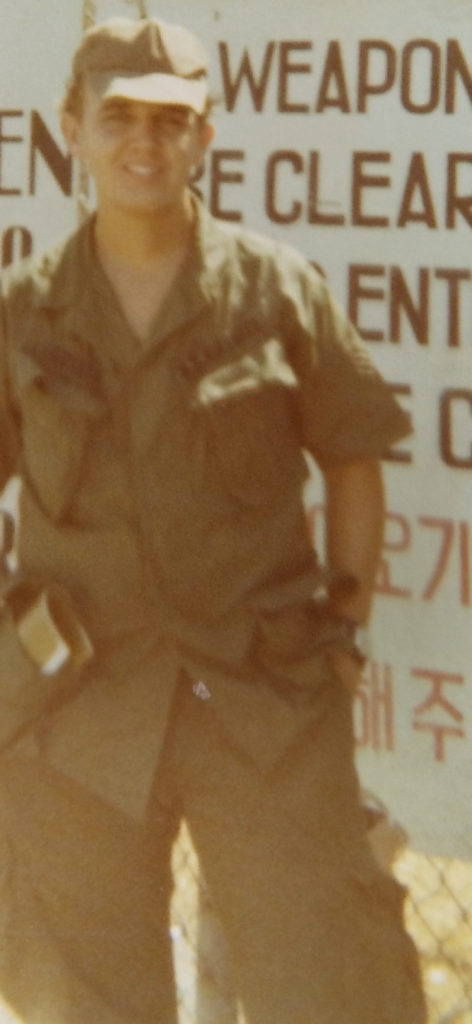
MPN Patient and Vietnam Veteran Wayne E.
I served in the USAF Security Service, 6924th Security Squadron, stationed in Da Nang, Vietnam for one year (1970-1971) and was exposed to the deadly Agent Orange/Dioxin. In 2007, after a simple pre-op blood test, I was diagnosed with essential thrombocythemia (ET). Upon further study I was told I had an incurable, but manageable, blood cancer, coupled with a gene mutation (JAK2). The word cancer scared me. I had never heard of ET and I was at a loss for what to do. I didn’t know where to go next. After much reading about these potentially deadly diseases, I found out I was one of many Vietnam Veterans who had an MPN.
In 2011, I filed my first claim with the VA. Until this filing, I was unable to get any substantial information from my primary care physician (PHP) or my hematologist/oncologist, as to what may have caused or contributed to my ET. They knew virtually nothing about Agent Orange. I contacted the National Institutes of Health, The Centers for Disease Control, and as many online medical sites as possible, all ending with a bigger question mark. Nothing could be explained to satisfy my inquiry.
It was by chance that I connected with a most remarkable group, MPN Advocacy and Education International. I could never thank them enough for the compassion and the understanding they extended to me.
After my initial rejection from the VA, I filed three more times and each time I was denied because MPNs are not on the “presumptive” list of Agent Orange-related illnesses. The same message I kept getting was I needed “clinical rationale” to support my claims. My doctors have not been able to provide me with this needed information. I don’t know what to do today. I understand there are many Vietnam vets that have won their appeals and now get benefits, but there are many others who were not approved and just gave up. I don’t plan to give up.
To my fellow Vietnam Veterans who may be dealing with one of these MPNs, don’t give up. If you have been denied, file an appeal. There is hope, comfort, and assistance available. With the help of MPN Advocacy and Education International.
A Veteran’s Story Told By His Wife
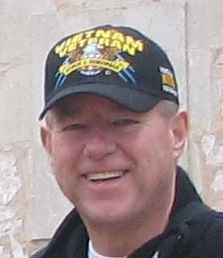
Bill C. Veteran and MPN Patient
In January 2017, my husband, Bill, was enjoying his consulting business and writing a book that has been in his mind for years, when an annual physical changed everything. Some lab work was “off” according to the Veterans Administration (VA) physician so Bill sent the lab results to our personal physician, who is also our best friend. Within ten minutes after receiving it, our friend asked Bill to come to his clinic immediately. Further blood tests yielded an initial diagnosis of Chronic Myeloid Leukemia (CML).
While we were reeling from that shock and trying to ground ourselves, our physician friend sent us to a local hematologist for additional work-ups and treatment. Following a bone marrow test, we were further shocked to find out that the CML we had become somewhat resolved with was indeed Myelofibrosis (MF). We sat in a dumb stupor trying to figure out what that was, how serious it was, where it came from, what we could do about it, etc. We were encouraged to start on the only medication for Myelofibrosis, Jakafi, and were told the only drawback to the drug was its cost–$10,000/month! We immediately started working with the VA for them to supply the medication. After numerous telephone calls and in-person visits with both our hematologist and the VA (in a city 40 miles from our home), we secured VA support for Bill’s Jakafi. It now routinely comes to our home in an innocuous package. The initial symptoms Bill was experiencing responded to the Jakafi but so did the platelets and hemoglobin which are continuing to drop so we played with the dosage to, hopefully, continue to drive the white blood count down while keeping the platelet count and hemoglobin up closer to where they should be. The drop in Jakafi was too drastic and symptoms immediately returned so our local hematologist moved Bill back to the original dosage. Symptoms once again are gone and platelets somewhat controlled but still very low. Hemoglobin is recovering which is good.
 While all of this was going on, we decided, with the support of our local hematologist (who is wonderful realizing this is all about Bill and not about the hematologist’s ego), to go to Rochester, MN to Mayo Clinic to see one of the leading researchers in Myelofibrosis, Dr. Tefferi. While there was no proactive guidance offered from this visit, we did learn that we should only approach researchers whose field of study is a fit between their interests and Bill’s current health status. To that end, we went to Northwestern University in Chicago to see Dr. Brady Stein, another renowned Myelofibrosis researcher. He listened and answered all of our questions while assessing Bill’s fitness for ongoing clinical trials. His ultimate recommendation was for us to consider a transplant—again, another shock as we had hoped that we would have a variety of alternative treatments Dr. Stein is concerned that Bill’s Next Gen Sequence report that showed other mutations limit the time he will have before he converts to Acute Myeloid Leukemia (AML). Since Bill is in such good health right now (ironically), Dr. Stein found him to be amongst 10% of people with MF that even qualify for a transplant consultation and while a transplant is a “rough ride” encouraged us to explore it.
To that end, we have met with Dr. Tom Chauncey who is the Program Director at the VA in Puget Sound-who along with the University of Washington at Seattle are the number one transplant center (particularly for people with MF) in the country. Dr. Chauncey was very generous with his time and counsel and offered to work with us as we continue to explore transplant options. With Dr. Stein’s support, we also will meet with the Director of the Northwestern University Transplant Program, Dr. Mehta.
Simultaneously, we filed a VA benefits claim related to Myelofibrosis, believing Bill’s exposure to Agent Orange most likely caused this illness, but we were denied. Bill is a Vietnam Veteran having served in Quang Tri—I Corp from November, 1968 – November, 1969 and was exposed to Agent Orange/Dioxin. While compiling our appeal information, we found numerous Citations where the VA had granted benefits for veterans (on appeal) who have been diagnosed with Myelofibrosis due to exposure to Agent Orange, so will be using that information to move our claim forward. During the exploration for more information, we also discovered that the VA is finalizing a rule to add to the benefits structure Stem Cell Transplant coverage as well as treatment protocol to include myelosuppressive therapies of which Jakafi is one. This proposed change is set to take effect in FY18 (which begins as soon as October 1, 2017) which is exciting for veterans waiting for coverage of Myelofibrosis because, at least, some of the symptoms and associated therapies will be addressed.
MPN Advocacy & Education International continues to advocate for essential thrombocythemia, myelofibrosis and polycythemia vera to be included in the VA’s ‘presumptive’ list of illnesses related to Agent Orange exposure. Please click here if you are in the process of filing a claim or appealing a claim for more details.
Like many of you, we are sure, our world right now is exploring drugs in Phase II or III of clinical trials that are successful in producing remission in MF as well as other drug trials/existing drugs that will hold down the “blasts” that would otherwise convert Bill to AML. We are also exploring transplant centers, protocol, outcomes, experiences, etc. to get a better sense of whether that is something we even want to consider.
In the midst of all of this, we continue to work hard to enjoy our lives. Having a daughter with Down Syndrome who is now 43 years old taught us that nothing is ever guaranteed and that we would have to fight for anything and everything we wanted. We “cut our teeth” on the fights for our daughter, Mindie, against insurmountable odds and won. Now we are using those skills on Bill’s behalf. While sad and scared, we remain determined that there are many, many opportunities for Bill to remain as healthy as he is today and live a long and enjoyable life beyond the current prognosis. We know there is a lot to learn from all of you “in our same boat” and look forward to sharing stories and guidance between all of us. In the interim, all of you touched by an MPN are in our thoughts and prayers. Together we can change the face of these diseases!