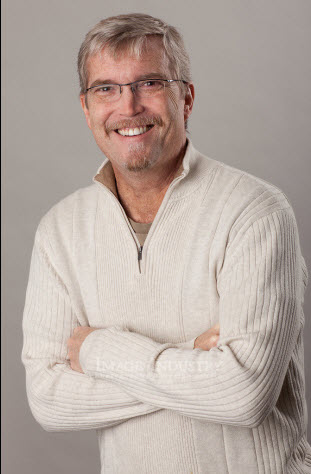
A Patient’s Story: Perseverance and Advocacy

Julie describes her PV journey as one that was initially filled with confusion, anxiety and an unclear path. In 1997, just 6 months after her father passed away from Non-Hodgkin’s lymphoma, abnormal lab results and her recent family history prompted her doctor to perform a bone marrow biopsy. At just 26 years old, she didn’t think twice when the biopsy was all clear and she was given a clean bill of health. 

Years later, an athlete and competitive mountain biker, Julie’s body suddenly refused to cooperate. After a noticeable change in her performance, she went to the doctor again. This time the doctor ordered a series of tests…and then an ultrasound…and then a heart catheterization. Her healthcare team had assured her, she was young, she was thin, she was in shape, she had no family history of heart problems, she was probably fine. Boy, were they wrong! Julie  had a 90 % blockage in her left anterior descending artery. Now, in her 30’s, she was told she would need a stent. What, no way?! she was on her way to Miami Beach with her friends, she had a bikini all picked out,  she was not doing surgeries and stents and hospitals. But that is exactly what she did. And afterwards, she felt amazing. 

This is where we have to stop and ask ourselves, why would a young woman with no family history of heart problems, who was thin, fit and otherwise well have this kind of episode? Well, the doctors didn’t know, so they labeled it coronary artery disease, told her to cut back on salt and sent her on her way. 

In 2008, Julie was racing motorcycles and working 60 hours a week. She was in charge of a large software roll out at the company she worked for…but something was off. In one week, her stomach was swollen, she lost her appetite, and when she did eat she was full almost immediately. By day four, she was so uncomfortable she couldn’t sleep, that’s when she headed to the ER. A percussion test revealed that her abdomen was filled with fluid (ascites) and they drained 2.2 liters that night. After being poked and prodded, they admitted her to the hospital and though perplexed, felt she may have ovarian cancer. The next six weeks were filled with various bouts of internal bleeding affecting multiple organs and bouncing in and out of the hospital, mostly in. It turns out, she had a serious clot in the hepatic vein that runs from the liver to the heart. Her liver was being strangled and “sweating like a quart of milk.” Not only was Julie unwell, but she was out of work during a pivotal moment for her company and her career. She felt as though was letting a lot of people down by being sick. 

At this point, she had a team of doctors who reviewed her medical records for the last 15 years. Enter the young, vibrant (and I would like to imagine) attractive doctor with a brand new Jak2 genetic blood test. The results? Julie was positive, and so were her doctors.  After a decade-long medical odyssey,  Julie was formally diagnosed with Polycythemia Vera. Another member from her medical team  told her, “Your life as you know it is over. You ride motorcycles, forget that, you’re not doing that. You’re 38, well you won’t have kids because you’ll have  a high-risk pregnancy. You are going to be on blood thinners for the rest of your life..” And the list went on. 

“You have to be feeling down, and then notice that if you start feeling more down, it takes twice the work to get back up again. And that’s what PV has taught me, so it’s not avoidance [of getting down] it’s more about where I am going to look? I learned that from motorcycling, wherever you look, that’s where you go.” Once stabilized, she walked out of the hospital, and looked up at the moon for the first time in 6 weeks. She felt lucky that she was even able to walk out of the hospital, some people were not. 

She said she has learned to sit with the fear, anxiety, and frustration when they creep up instead of running from them. But she doesn’t stay there, “you can go cry in your room, but you can’t just stay there and die.” Julie remembers that people usually die with PV, but not from it and that she is living with cancer. 

How did she cope? She started keeping track of how she felt each day. She was forced to get better at listening to her body. After a while, she saw patterns emerging and associations between her feelings and her lab work. For example, when her hematocrit spikes her scalp gets itchy and her fingertips get red. When this happens she knows it’s time for a phlebotomy. The more she knew about herself, the more she felt she was able to take care of herself, and that confidence reduced her anxiety. From there, she was able to start talking to the people around her about what she was experiencing and what she needed. She was even able to begin to direct her medical team, sharing with them important associations and symptoms that they could use to make better decisions about her treatment together. 

Four years after her diagnosis, Julie and her husband welcomed their son into the world. Pregnancy suited her, and her PV. Not only did she become a mom, she also became a mentor to MPN patients. She said that what she went through, and what she still goes through is more purposeful if she can share it to help someone else feel less afraid, less isolated, and less confused. 

Julie emphasized that PV has been and continues to be a journey, she hasn’t arrived, the journey is still in process. She said, “PV is the gift I didn’t want because it made me more grateful for the life I have, more aware of the people around me, more open to the world and its beauty…and it didn’t start out that way.”

If you want to learn more about Julie’s journey you can see her talk about her story on Facebook or read more about her at Woman’s Day. She also did a quick video about itching and is available to connect with other patients at  pvmamawarrior@gmail.com.
Childbirth rates in women with myeloproliferative neoplasms

Published March 9, 2024

Anna Ravn Landtblom, Therese M-L Andersson, Anna L. V. Johansson, Frida E. Lundberg, Jan Samuelsson, Magnus Björkholm & Malin Hultcrantz

Abstract

Myeloproliferative neoplasms (MPN) are associated with inferior pregnancy outcome, however, little is known about fertility and childbearing potential in women with MPN. In this study we aimed to describe reproductive patterns, as well as to quantify risk of miscarriage and stillbirth. Women aged 15–44 years with an MPN diagnosis 1973–2018, were identified in Swedish health care registers, and age-matched 1:4 to population controls. We identified 1141 women with MPN and 4564 controls. Women with MPN had a lower rate of childbirth (hazard ratio [HR] with 95% confidence interval was 0.78 (0.68–0.90)). Subgroup analysis showed that the rate was not significantly reduced in essential thrombocythemia, HR 1.02 (0.86–1.22) while the HR was 0.50 (0.33–0.76) in PV and 0.45 (0.28–0.74) in PMF. The risk of miscarriage was not significantly increased before MPN diagnosis, the HR during follow-up after diagnosis was 1.25 (0.89-1.76). Women with MPN were more likely to have had a previous stillbirth. Women with MPN had fewer children at diagnosis, and fewer children in total. In conclusion, the childbirth rate was lower among women with MPN than controls, but not among women with essential thrombocythemia.

Read more

A Review About the Assessment of the Bleeding and Thrombosis Risk for Patients With Myeloproliferative Neoplasms Scheduled for Surgery

Mihaela Andreescu
Bogdan Andreescu

Published March 12, 2024

Abstract

Myeloproliferative neoplasms (MPNs) present a unique challenge in surgical management due to their inherent predisposition to both bleeding and thrombosis. MPNs are a heterogenous group of acquired clonal conditions. The three classic MPNs are essential thrombocythemia (ET), myelofibrosis (PMF), and polycythemia vera (PV). All subtypes of MPN are associated with both thrombotic and bleeding complications. There are four risk categories for thrombosis in MPN patients: age, thrombosis history, and JAK-2 mutation. They are further classified as very low, low, intermediate, and high risk. The genetic landscape of MPN is fascinating and complex like all myeloid disorders. Bleeding risk can be assessed through leukocytosis, thrombocytosis, acquired von Willebrand syndrome (AVWS), and a previous history of bleeding in a patient. Risk assessment and perioperative management are important aspects of improving the quality of life and preventing complications in surgeries. Preoperative management includes a risk assessment of venous thromboembolism, use of appropriate pharmacological treatment, platelet count control, and correction and cardiovascular risk factors. This review summarizes the assessment of bleeding and thrombosis risk for patients with MPNs scheduled for surgery. Furthermore, this review discusses various tools that can be used to identify MPN patients at risk of thrombosis prior to surgery.

Read more


A Patient Story: Living 32 Years with an MPN

By Ron K.

Fortunately, my MPN journey has been a long one. I was first diagnosed 32 years ago and I know have post-Polycythemia Vera Myelofibrosis. Looking back it was almost archaic in nature. Today the progress has been immense on many fronts, not just in treatment, but with treating the patient as a whole. As many of you know, there is no exact recipe book for life with cancer and its treatment journey is unique.  My hope is that sharing some of my experiences may help someone else along the way.

There is a quote by Albert Einstein that reflects my approach to my medical journey

Learn from yesterday, Live for today, Hope for tomorrow. The important part is to not stop questioning.

Learn, Live, Hope – three good words for any cancer patient.

As those with an MPN know this is a chronic neoplasm and unfortunately there is no treatment yet to cure this illness. Some of the latest MPN and MF drugs do improve one’s quality of life and even appear to extend one’s survival, a significant milestone from what was available just a handful of years ago. Finding ways to slow or stop the progression is my only hope until medical knowledge can surpass me with a real solution.

Having a chronic cancer and having it for a long time has enabled and encouraged me to evolve into a healthier lifestyle. One does not have to change everything overnight but just evolve and continue to build healthier ways, one step at a time. While there is no evidence that a healthy lifestyle will cure me, it is something I can do and have control over.

This all started back in 1985 when I went to my family doctor with a cold and I mentioned that my colds seem to last longer and hit me harder than others.  A simple blood test began my journey.  I would not be alive today if I followed my first hematologist’s treatment plan. He wanted to treat me in a traditional manner at that time, with a radio isotope that kills off some of the marrow, they know now that treatment leads to an acute leukemia years down the road. Instead my intuition questioned this approach, since I was only 31 and I thought that I might need that marrow later in life.  I called a major metro medical center and asked for an appointment with their Chief of Hematology. Unknown to me at the time, and not commonly termed in the 1980’s, I was going to get something called a second opinion. I got an appointment and his approach was quite different. He wanted to understand me, my rate of progression, severity, etc as that would lead him to figure out how to best treat me. He even commented that the current radio isotope treatment (my first hematologist’s plan) to kill off marrow was likely going away as he saw it.

Today, I am a patient of Dr. Mesa’s. I found that they could answer all my questions. Answers to questions that my previous hematologists could not answer. They have knowledge that is very leading edge as to direction of MPN treatments as they are part of an elite group of hematologists that are making many of the MPN discoveries, designing the clinical trials and studies with other key hematologists around the world.  So my personal doctor advice is to make sure you find the right doctor and treatment strategy for you. Listen to your intuition and ask questions, seek information and acquire knowledge in your cancer and health. Expect answers or find those professionals that can give them to you. While I did not need a MPN specific doctor early on I do need one now as I am living well beyond the averages.

For me, finding the right doctor has been a key in my cancer treatment journey. Getting a second opinion is also key. What you will likely find is the different doctors will agree on the diagnosis but their treatment strategy will often be different.

I attend conferences, seminars, and special programs such as those that the MPN Advocacy and Education International puts on. I have done online webinars or conferences as well as belong to online MPN listing groups to learn and share information. I find this information to be helpful to ask the right questions to my doctors and understand what may be option in the future.

I believe support makes a difference. It is helpful to have support from your spouse, kids, parents or friends. I also find that support groups can be very helpful as well. As they can fill a support void that is missing from one’s non-cancer family and friends. This is no fault of family, spouses, or friends in that they do listen and they do try to understand and relate and they do support the cancer patient, but I have found that belonging to a cancer support group often helps to fulfill things non-cancer patients cannot quite grasp. I have belonged to both hematology specific support groups and all cancers support groups. You might want to try both and see if one works better than another.


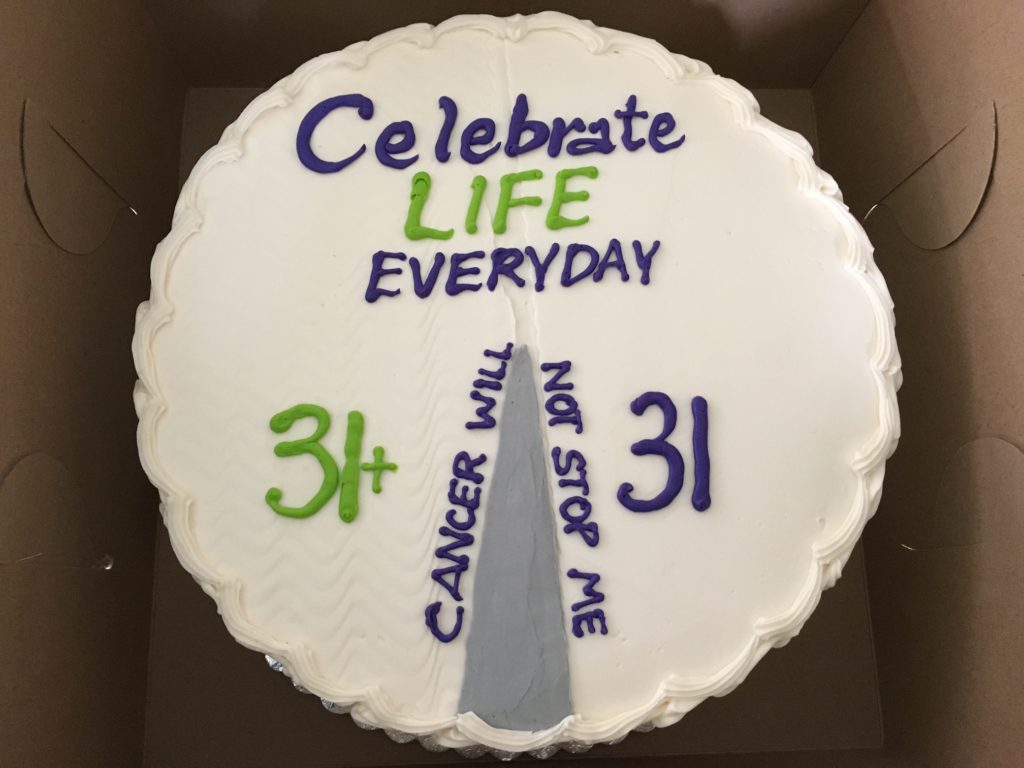
As I live my life, I am grateful for every day. Everyday is a great day, just some are even better than others.  I even celebrated the point in my life where I have lived longer with cancer as part of my life than without cancer. That was at about 31 1/2 years and I had a bakery make me a cake to celebrate the occasion. The cake was symbolic of my MPN journey and view of life. I celebrated this occasion with my all cancer support group. So while cancer is a part of my life I run my life with cancer being a part of it and I do not let my cancer rule over me.  I am hopeful that a cure is in our much sunnier MPN journey. May the best be yet to come, and enjoy the day!

Tips for Caregivers

Suggestions for being an effective caregiver

Caring for a person with cancer may seem complex and like too much to cope with at first. Depending on the person’s needs, you may provide different types of support, such as:

  • Emotional support
  • Help with medical care
  • Assist with financial and insurance issues
  • Serve as the communicator between the patient and the health care team

You may find the following tips can help you become a successful caregiver:

Remember that caregiving is a team effort. A caregiver is a member of an important team of family members, friends, volunteers, and the health care team. Each member of the team offers different skills and strengths to provide effective care.

If you are the main caregiver, help each team member express concerns, opinions, and emotions. Also, make sure that the person with cancer has a central role in all discussions and decisions, if possible. It is very important for the person with cancer to feel like an active member in their care.

CancerCare provides a special website for caregivers called My Cancer Circle.  This website can help caregivers organize the family and friends who want to help. Find other online communities for support.

Create a list of tasks. Caregiving, like any responsibility, involves tasks of varying importance. Start by making a list of all of your caregiving tasks. Then, use it to decide how to divide the tasks between friends, family, professionals, and other volunteers.

Be proactive. Being proactive means taking charge and planning as much as possible to prevent last-minute emergencies. This can also help provide a sense of control and order. Create schedules that list which relative, friend, or other volunteer is available when and for what tasks. Make sure that all of the caregivers involved have some time to be away without feeling guilty or concerned. Long-distance caregiving takes even more planning. Find out more about how to be an effective long-distance caregiver.


Read more

A Patient’s Story: My Clinical Trial Experiences

 At what point in your MPN diagnosis did you join a clinical trial?  What trial (drug) were you in?

I was diagnosed with PV in 2001.  Only on phlebotomy and 81mg aspirin until 2007 when I began hydroxyurea because I turned 60 in 2006 and was now “high risk.”  In 2009 my spleen was enlarging. I had been hearing that Interferon was best taken in the early stage of MF and might reduce myelofibrosis.  My hematologist advised me he would be having a trial with Pegasys (Interferon) and I should wait for that. I actually waited until 2012 when the trial became available.  I was now showing signs through bone marrow biopsies of secondary MF.
Did you feel as though you received accurate information getting into the trial?

Yes, I had been reading about Interferon treatment and knew I wanted to try it.  Perhaps I didn’t know how quickly I could be removed from the trial because of my worsening symptoms.
What didn’t you know going into the trial that would be useful for others to know or questions they might ask?

It would have helped to know at what point you may be pulled from the trial and what happens after you are removed.  Also, I did not know that the FDA can shut a trial down at any point due to adverse reactions to few patients.

How many clinical trials have you participated in?

I am currently on my 3rd clinical trial.  (First trial wasn’t improving my symptoms, second trial was shut down by the FDA and the pharma company decided not to proceed , and the third trial I have begun my 4th year.)

Were you able to get the drugs after the trial(s) if you were doing well?

I can continue with the drug I am currently on as long as I continue to have benefit and as long as there is funding for this drug by the pharma company, and that it doesn’t get shut down prior to FDA approval

What advice would you impart to those who are skeptical about clinical trials who are not doing well on available treatments?

What do you have to lose?  If you are currently not well, you certainly may have good results and feel better.  If you don’t show benefit you will be removed to try something else.  We do not know the future after taking these drugs.  That is a gamble we must take.

Would you participate in other trials knowing what you know now?  

If I was not feeling well and I met the qualifications, I would try again.

Marylin C. has been living with her diagnosis for many years.  She has graciously volunteered for trials not only for her own reasons, but for the sake of MPN patients and their futures.


The Ultimate Blood Brothers

ronanderson

Ron Anderson

Ron Anderson, LA Support Group Coordinator, received a bone marrow transplant eight years ago.  His brother, a perfect match, was his donor.  We asked his brother to share his experience to get a donor’s perspective.

Was there ever a time, once you knew you were a perfect match for your brother, that you thought you would not be his donor?

No, by the time his doctor told him he needed a bone marrow transplant he was seriously ill and probably would not survive for very long without a total transplant.  As it turned out, my brother and I have type A+ blood and (thank God) I turned out to be a very good match for him.  I just felt very fortunate I would be a great donor and could help him.

When I told him I was willing to be his donor I thought I would be going into a hospital operating room and have doctors use needles to remove my marrow from my pelvic bone.  Later, I found out about Peripheral Blood Stem Cells (PBSCs) and a process called apheresis.  My stem cells could be collected by drawing blood out of my veins, filtering them out and the rest of my blood would be given back to me.   I was very pleased to learn about this nonsurgical method.

How has this experience changed you?

For the first time I took a hard look at my entire family’s age/health issues and felt there was a real possibility that I might not have any family members alive in the next 5 to 10 years.  That was not a very comforting thought for me.  I think this experience with Ron not only strengthened my relationship with him but with my entire family.  Since Ron’s transplant in 2009 I have tried not to take my family for granted.  Since 2009 both of my parents have passed away but I am very thankful I still have my two brothers.

What, if any, were the side effects?

The only side effects I can remember was some mild hip and shoulder joint pain issues after taking the drug Neupogen to increase my stem cell production.  It went away within a reasonable time frame (I think about a couple of weeks) after I stopped taking that medication.  The only other issue I experienced was during my hospital blood collection time when I had some tingling around my mouth apparently from decreased calcium blood levels from the filtering process of my stem cells.   That tingling totally stopped after the apheresis when completed.

Can you briefly explain the experience in the hospital?

All the hospital staff were great and they gave a very good explanation of what would be happening during my stay.  They were very caring and made me feel very comfortable during the apheresis process.

In the hospital, I sat in a comfortable lounge chair for about 6 hours a day for 2 days (because I also agreed to give extra cells to stem cell researchers) squeezing a soft ball with my hand during the stem cell collection process.  As my blood calcium levels dropped during the apheresis procedure calcium had to be replaced back into my vein which sometimes caused that vein to fail and infiltrate.  I think the worst part of the hospital stay was the restarting of new I.Vs.  I had about 4 or 5 new I.V. restarts a day and some pretty good bruises on the back of my hands and forearms by the time the apheresis was completed.  At the end of the day, a very small price to pay for helping my brother.


Caregiving: What I’ve Learned

By Stephen W.

My wife was diagnosed with ET (Essential Thrombocythemia) in 2007. Since then, her health issues have varied. For several months, she will do very well with little to no problems, and then an episode that has included an ER visit on occasion, will throw us into action mode. Even our children know what is expected of them. We all becoming a caregiving team.

Caregiving has many layers. It requires endurance, listening skills, humility, open mindedness, flexibility, wisdom, empathy, managerial skills, problem solving skills, healthy choices, rest, outlets, support and in many ways, the needs similar to those we care for, except that we have to be willing to be the strength BEHIND the patient.

Endurance. There will be days when the one you are caring for requires everything you’ve got. It is easy to get burnt out. You may find yourself doing it all and feeling a bit resentful, at times. My suggestion is to get a backup caregiver. So many people offer help and we graciously decline with a thank you and assurance that we are okay. I now say, thank you and how can you help? Getting help doesn’t mean you are shrugging your responsibilities or care less about your loved one. It is a wise decision when times are tough. Sometimes just having someone grocery shop is a great gift.

Humility. Caregiving is not about you. I’ve learned to keep my place and learn from my wife and those that administer her medical care. I don’t have all the answers. My role is vital but there is no room for an ego.

Managerial skills. I never dreamed the managerial skills I learned in my career would come in handy for caregiving. Managing appointments, medical needs, insurance companies, children, household needs, and day to day care for the patient can be overwhelming without a system. When times are tough we run a tight ship with each of us knowing our role and responsibilities. Delegating is a way of life. We’ve learned to adjust quickly and as needed.

Keeping EVERYONE healthy. Parenting and caregiving for an adult are very similar. If we aren’t healthy, everyone suffers. Proper nutrition, exercise, rest, and finding outlets and support are essential. Recognize when you need a break and take it.

The Rewards. I’ve never felt closer to my wife. Our family is stronger and we know we can rely on one another. I’ve learned a lot about ET, but equally about life and love.

Click here for more Caregiver Resources


A Veteran’s Story: Gaining Knowledge and Advocating

I served in the Army during a more recent war than many of the veterans who have been diagnosed with an MPN.  I was diagnosed with Essential Thrombocythemia (ET) in early 2013. My son was only a year old and I had spent two weeks in a VA hospital while hematologists tried to rule out other illnesses. I was put on Hydroxyurea (Hydrea) almost immediately due to the aggressive rise of my platelet count. It was eventually controlled and I was sent off with a permanent Hydrea prescription.

My background in health care and my university education prompted me to research this illness and I learned a lot.  I read about alternative drugs, but the drug that stood out to me the most was peginterferon alfa-2a (Pegasys). It’s what was advised for young females of childbearing age, as it isn’t harmful to a fetus. I also learned that Pegasys is the only known drug that gives a glimmer of hope for remission. That’s when I decided I wanted to be on Pegasys. Hydrea was giving me terrible side effects.

I joined several MPN support groups on Facebook. This is probably the best thing I ever did for my condition. The wealth of information in those groups is astounding. I met many people who were very proactive in finding the correct treatments that alleviated some of their symptoms.

I was fortunate to have the wherewithal to find this out on my own.  I’m sure there are many veterans who do not or cannot advocate for themselves and are probably too tired, too sick or too confident in the VA to research this for themselves. Or maybe many of them had but had been denied, like I was.

At my visit with my VA oncologist, I mentioned Pegasys and my desire to be on it. I was told that Hydrea is the standard drug for ET and that all other patients are on it. I was adamant to get on Pegasys and was told that only Melanoma patients received it. Luckily, I had a receptive and understanding oncologist who said he’d research it first before giving it to me. After doing his own research, he agreed. I think I was the first ET-VA patient in Central Texas to be put on Pegasys. To this day, I believe I’m still the only one.

I was very lucky.  I’m sure this does not happen often with other VA physicians.  My other mission was to be seen by an MPN expert.  Making all these discoveries on my own really showed me how rare MPNs are and how unaware many VA hematologist/oncologists are about the best current available treatments.  This is my life…but not just mine, my son’s too.  I owe it to him to improve my health and extend my life.

My hematologist/oncologist agreed to submit a request to get seen at MD Anderson in Houston. I was placed into the Veteran’s Choice program and repeatedly given appointments with local civilian physician.  After letting the program know time and time again, that I wanted to go to MD Anderson, my oncologist told me it had been rejected because the VA doesn’t approve “second opinions.”

I was disappointed but grateful that, at least, I was on Pegasys. About a year later, I decided to prepare to have another baby. My VA gynecologist advised me to let my oncologist know of this. At my appointment, I told my oncologist my plans and he said he’d put in another request for the VA to cover a visit to see an MPN expert. I didn’t get my hopes up.

Sometime after, I got a call saying I was approved for two visits at MD Anderson. I saw an MPN expert who basically told me I was on the right medication (Pegasys) but that I was taking it too often because my white blood cell count was low and I was very fatigued (among other disturbing symptoms). He decreased the frequency and I felt much better with my white blood cell count being within normal range for the first time in three years. MD Anderson also tested me for mutations that the VA couldn’t perform. I had many questions answered and was finally at peace with how my condition was being handled. I was ready to move forward confidently, I felt closure.

None of this would have happened if I had been a man. The VA only approved my MD Anderson visit after learning about my intention to get pregnant. As a female, I’m a minority at the VA. There are many male vets who aren’t benefiting from a visit with an MPN expert.

If I hadn’t done my own research on ET, I would still be on Hydrea today. The side effects were very trying. Pegasys wasn’t even on their radar. Even if the VA approves prescriptions for Pegasys, Anagrelide, Jakafi or something else, the patients could be suffering from dosage/frequency problems, like I was. An MPN expert can help sort this out, and so much more.

I encourage MPN patients and their oncologists to do their own research. Veterans have the right to know about alternate treatments. Veterans also need to see knowledgeable experts and have access to blood tests that are relevant to their condition.


An Anonymous Message from an MPN Patient

images-1

If I had a dime for all of those folks who said I should be thankful for a PV diagnosis versus “a more serious ” cancer, I’d be rich.  Instead, I spent the first year wallowing in my grief over the loss of my 100% healthy me.  As I grew accustomed to identifying myself as a blood cancer patient, I began to reassess and reevaluate who I was and why I should, indeed, be thankful.

  • I have few symptoms.  My diagnosis was out of the blue through a routine CBC.
  • My support system reaches around the world with MPN groups and individuals always willing to help.
  • My health care group isn’t always privy to the latest news so I bring it to them and they listen.
  • I still have a job and although I pay for part of my health insurance, I am thankful to be insured.
  • So much is happening in the MPN Community, I am thankful I have options in treatments and access to knowledgeable physicians-This is due to one-on-one access to the experts at educational programs.  I paid nothing for registration (ask Ann Brazeau).
  • I now believe I can manage this chronic disease and have taken charge of my condition.

I am thankful for all of the aforementioned and much more.  Mostly, I’m thankful for being able to help others now when they are diagnosed.  Help is a click, call or holler away!

Click here for resources

Call-517-899-6889 or email abrazeau@mpnadvocacy.com